
Your funders can tell your last piece of content lacked soul and courage. We’re really sorry about that.
You know who else can tell: your customers, your community, and the very people you’re trying to reach.
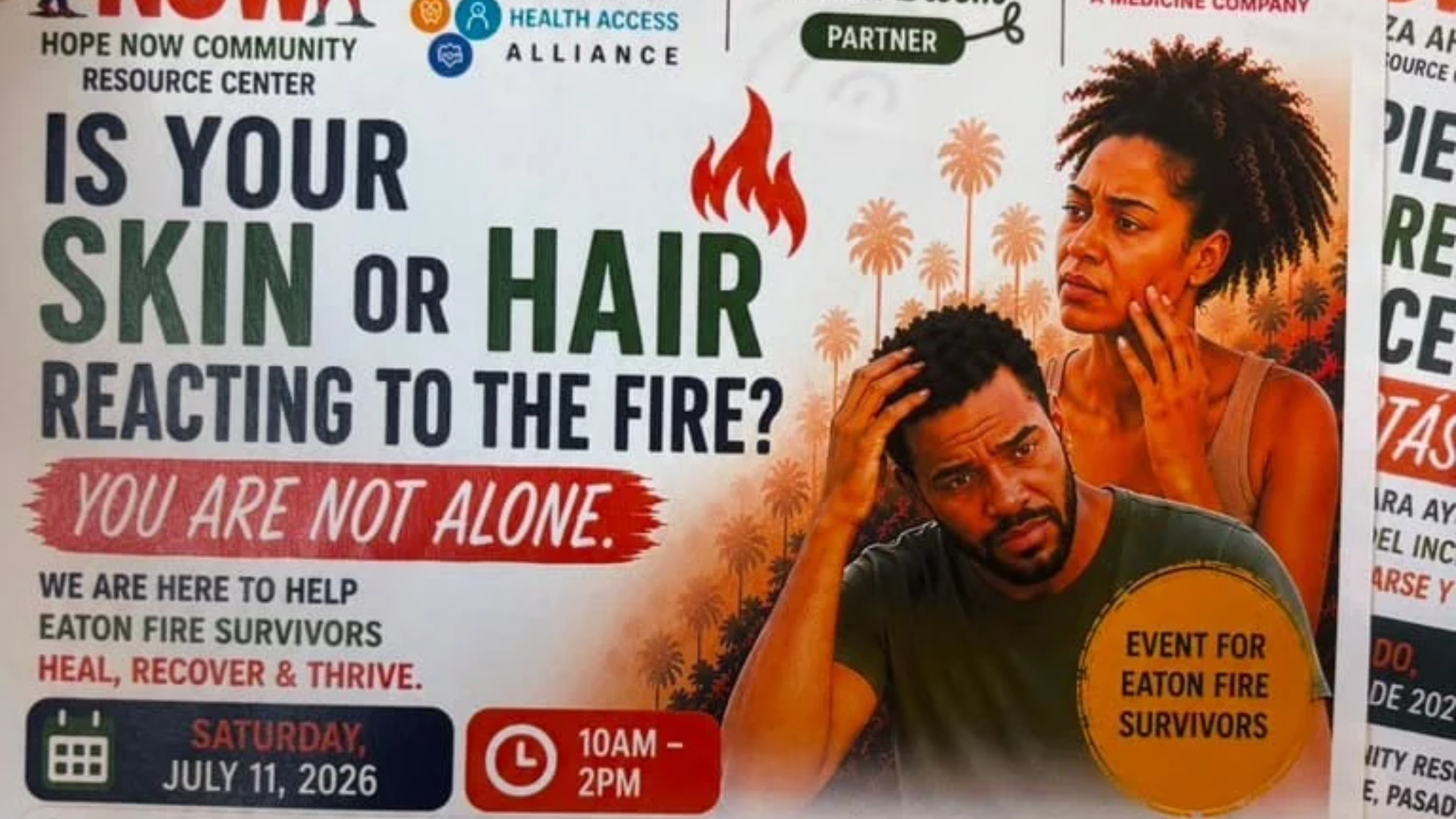
And it’s not just the writing. It’s the flyer that looks great until you read it out loud. It’s the video with a voiceover that sounds like a GPS reading a press release. It’s the “community member” in your campaign image who, it turns out, doesn’t belong to anyone’s community. People scroll past all of it with the same quiet thought: nobody’s home.
That feeling has a name now. It’s called AI slop, and people are getting really good at spotting it from a mile away.
Here’s the part where we come clean: we use AI at Community Symbol. We’re not going to pretend otherwise, and we’re not going to tell you to quit using AI tools all together. But we are going to tell you why so much of what AI produces feels so hollow, and why the fix has very little to do with the technology itself.
Everybody’s roasting AI flyers (and they have a point)
If you’ve been on Instagram lately, you may have seen graphic design creators calling out organizations’ AI-generated flyers, and posting the receipts.
One of them, ellostudio.co, has been going viral with posts that show a real AI flyer someone made, a research-backed critique, and then what a human designer would do instead. The punchline is simple: hire a designer.
We love this type of energy. A lot of those flyers deserve the roast. But we think this type of content points the finger at the wrong villain.
The AI tool isn’t the problem. What happens when you feed the AI nothing is the problem.
People aren’t mad at AI. They’re mad that nobody’s home.
Here’s what’s interesting about how people actually feel.
Most folks are fine with AI working behind the scenes. In a Neon One survey of more than 2,000 donors, nearly all said they approve of organizations using it in their day-to-day operations. What they don’t want is a machine at the microphone: 71% of the survey’s respondents said it’s moderately or very important that a human is involved in writing the communications they receive.
You can see what happens when that human goes missing.
In 2023, Vanderbilt’s Peabody College sent an email to its community after a mass shooting at Michigan State University. The message was about caring for one another and coming together. Then readers noticed a line just before the signature saying the text was a paraphrase of OpenAI’s ChatGPT.
The backlash came fast.
The college’s own associate dean said using ChatGPT contradicted the values of the college, and the dean apologized, explaining that administrators hadn’t known about the email and it hadn’t been properly reviewed. Two staff members stepped back from their roles while the school looked into what happened.
Here’s the thing: the words in that email weren’t necessarily bad. What people reacted to was that no one seemed to stand behind the words the university used to take a stand. That’s the whole point. AI in the engine room, a human at the microphone.
Why so much AI content sounds the same (and what that costs you)
Here’s something we’ve been thinking about lately. McKinsey’s 2026 research on marketing found that nearly 60% of marketers use AI several times a week, yet fewer than 10% of organizations have captured real value from it.
So almost every team is using AI as a tool to do more with less, and almost none are getting much out of it. The gap they’re often experiencing isn’t about speed or access. It’s what people put into the tool in the first place.
When you give AI nothing but a mission statement and a vague prompt, all it can do is hand back the most average version of everything it has read about organizations like yours. Your content ends up sounding like everyone else’s, because it started from the same empty place.
McKinsey also describes a shift from an attention economy toward what it calls a “trust economy.” We think that’s the heart of this debate. More content isn’t the win. Being trusted is the most important part.
That matters even more if you’re a government agency, a foundation, or a coalition, because people already have questions about whether institutions are being straight with them. The League of California Cities has long warned that unclear language can lead the public to question whether an agency genuinely wants them to understand and take part in our democracy.
Vague words are one version of that. Vague visuals are another: the stock-looking photo of “residents” who don’t exist, or the glossy AI graphic standing in for the actual neighborhood. When the language and the images say nothing, people don’t just get bored. They start wondering what’s being left out, and trust leaks away.
So what do we do differently?
Community OS is the communications infrastructure that Community Symbol builds and runs for our clients, and it’s how we make sure AI always has something real to work with and a person always standing behind what goes out the door. The system has five connected layers that surface your message, capture your stories, produce your content, keep you showing up on a steady rhythm, and translate your results into the language funders understand. We manage the whole system, so your team can focus on the mission while your story shows up consistently.
For this conversation, let’s focus on one idea that grounds our approach with every piece of AI-assisted content: if the output is hollow, fix the input. Before AI touches anything, we focus on three ingredients:
- Real material — Through our Story Capture Engine, one of those five layers, we gather what we call Field Notes: the real wins, quotes, proof points, and moments from the work itself, before they disappear into someone’s inbox or memory. AI works with your specifics instead of generic filler.
- Real voices — The people closest to the work, and the community members you serve, tell the story in their own words. A machine can’t invent that, and it shouldn’t try.
- A justice and equity lens, and a human who’s accountable — A person reads every word, reviews every image, edits with care, and asks the hard questions: Is this true? Is this respectful? Does this sound like us? Would the people in this story recognize themselves in it?
That’s the difference between AI with nothing to say and AI with something to work with. We don’t think of the technology as replacing a human. We think of it as giving a human better raw material and more time to do the part only a human can do.
One more thing: who built the robot?
If we stopped at “feed it real material and have a human check it,” we’d be skipping a bigger question: Whose thinking is baked into these tools in the first place?
Earlier this year, filmmaker Valerie Veatch premiered the documentary Ghost in the Machine at Sundance. Among other things, it traces how statistics and machine learning grew from eugenics. The film also spends time on Charles Spearman, an English scientist who built statistical tools that were used to defend and promote the science of eugenics. The film then pushes back on the PR story heard in most news outlets that a superintelligent machine is just around the corner, and the film notes that those fears can help sell the technology.
Ghost in the Machine isn’t alone with those opinions.
Timnit Gebru and Émile Torres argue in a peer-reviewed paper that the push to build artificial general intelligence is rooted in the Anglo-American eugenics tradition of the 20th century, and that some of the same discriminatory attitudes persist in parts of the AI world. (Fair warning: Not everyone agrees with their framing, and those debates are worth reading for yourself.)
We’re not telling you what to conclude. We’re telling you how it shapes the way we work.
If these AI tools carry the values, assumptions, and blind spots of the people and data behind them, then a justice and equity lens is how you protect your community’s self-determination over its own story.
Human review isn’t just a courtesy. It’s accountability. For organizations that serve communities who’ve historically been left out of the story, handing your voice and your images to an AI tool trained on everybody else’s words, with nobody checking, is a real risk.
So we use these tools with our eyes open, our judgment turned on, and a person accountable for every word and visual that goes out the door.
The AI robot can help you say it. Only you can mean it.