
Most organizations in the social impact space treat storytelling like a campaign.
They gear up, gather stories, publish something meaningful, and then move on to the next urgent thing.
The stories get told once. The moment passes. And the people behind those stories—the ones whose lives the work is actually for—recede back into a statistic in next year’s annual report.
What if the most powerful story your organization will ever tell isn’t a finished one?
That’s the question at the heart of one of the most quietly radical storytelling projects happening inside a government agency right now, and it’s been unfolding in Los Angeles County since 2019.
A government agency that chose to keep going
The Violence, Hope and Healing in Los Angeles County: The Storytelling Project was born out of a simple but profound idea: What if the data the L.A. County Office of Violence Prevention was collecting could be humanized? What if the people behind those numbers could speak for themselves? Not to be studied, but to be heard.
Artist and cultural worker Olga Koumoundouros began a creative strategist residency with the county’s newly formed Office of Violence Prevention in 2019. Instead of arriving with a pre-built campaign in mind, she spent her first year listening—participating in strategic planning sessions, engaging with the violence prevention office’s Community Partnership Council, learning the landscape. She introduced trauma-informed, arts-based community engagement methods. And then, together with the director of the agency and the broader team, she developed the Storytelling Project.
The project launched at the beginning of the COVID-19 pandemic—one of the most difficult possible moments to ask people to open up about their experiences with violence.
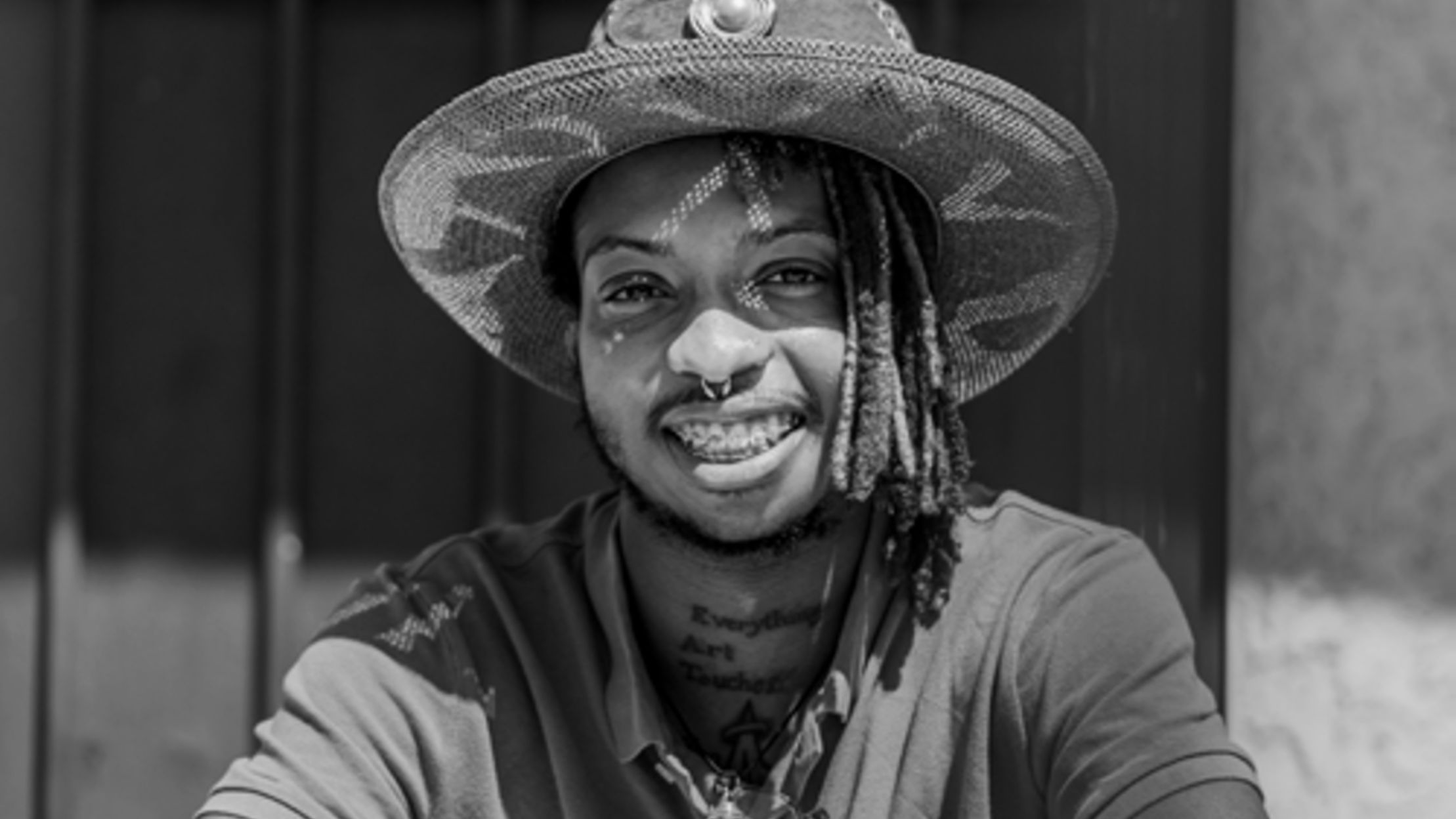
And yet Koumoundouros persevered, adjusted her approach, and, over the course of a year, recorded 100 stories and 54 photographs of L.A. County residents who had experienced violence at the individual or systemic level. Each person was invited to have their portrait taken by photographer Johnny Pérez in a location of their own choosing. Their own neighborhood. Their own home. A corner of the city that meant something to them. The choice was theirs.
That detail matters more than it might seem.
Letting people choose where they’re photographed is a story capture decision—one that says the storyteller’s context is as important as the story itself.
What makes this different from every other social impact marketing project
Here’s what most social impact-focused organizations do: they collect stories for a campaign, publish a report or a video series, then archive the material and move on. The stories serve the organization’s short-term communications goals. When those goals are met, so does the storytelling.
L.A. County’s Office of Violence Prevention did something different. They kept going.
In 2022, the violence prevention office and the county’s Department of Arts and Culture hosted an in-person gathering at the California Endowment, bringing together county employees and the subjects of the storytelling series—not to present the work to them, but to learn from them. Residents talked about their healing journeys. They told policymakers directly what they needed them to know.
The gathering wasn’t a celebration of a completed project. It was a continuation of the conversation.
In 2023, the L.A. County Anti-Racism, Diversity and Inclusion (ARDI) Initiative provided new funding to expand the project. In 2024, violence prevention staff led by a policy analyst interviewed an additional 43 storytellers. Johnny Pérez returned to make new portraits. The stories kept coming. The archive kept growing.
And in 2025, they held another gathering—this time with the ARDI Initiative joining as a co-host—creating space, again, for celebration, connection, healing, learning, and reflection.
A second book is now in development.
This is not a campaign. This is infrastructure.
What justice communicators can learn from this
The L.A. County Office of Violence Prevention Storytelling Project teaches us several things that a lot of justice communicators miss.
The first is that you don’t have to wait for a finished story to tell it. Every one of the people interviewed for this project was still living their life, still navigating systems, still on a journey. The violence prevention office didn’t wait for there to be a resolution. They captured the story where the person was and let that be enough.
The second is that the relationship between the subject of the story and the organization matters as much as the content itself. The violence prevention office’s approach was explicitly trauma-informed. Each session ended with the Havening Technique, a grounding exercise that brought participants back to the present moment after sharing something difficult.
Every story was transcribed, edited, and shared back with the person at the center of the story for final approval before anything was published. They weren’t just treated as sources. They were collaborators with agency over their own narratives.
The third is the one that should reshape how every justice-motivated organization thinks about its communications practice: storytelling is more powerful when it’s treated as an ongoing practice, not a one-time event. The Storytelling Project didn’t get more powerful because it collected more stories. It got more powerful because it kept showing up—year after year, gathering after gathering, portrait after portrait—building a living archive that grows alongside the community it serves.
How this connects to what we do inside Community OS
This is exactly the philosophy behind the Story Capture Engine, the layer inside Community OS where we help justice-motivated organizations build the internal practice of recognizing and capturing stories as they happen, before they disappear into the blur of the next urgent thing.
Most organizations we work with have no shortage of stories. What they’re missing is a system for seeing them in the moment—for knowing that the case manager who stayed two hours late is a story, that the community member who came back to volunteer is a story, that the board member who cried during the site visit is a story—and capturing those moments before the week moves on.
L.A. County’s Office of Violence Prevention built that system at a county government scale, with artists, photographers, policy analysts, and community partners all contributing to a shared practice of paying attention.
You don’t need that level of infrastructure to start. You need the habit and a functional system for turning that habit into content that builds your organization’s narrative over time.
Because here’s what the Storytelling Project shows us, more clearly than almost anything else we’ve come across: the story that’s still in progress is often the most powerful one you have. Not the polished case study. Not the annual report. The one that’s still unfolding. The one where the person is still fighting, still healing, still finding their way.
That story is happening inside your organization right now. The question is whether you have a way to catch it before it’s gone.